

VariQuest Tools: Cutout Maker 1800 | Featured Topics: Funding | VariQuest Tools: Trifecta 800 3D Printer | VariQuest Tools: Motiva 400 | VariQuest Tools: Perfecta 2400STP | VariQuest Tools: Perfecta 3600STP
Title I funds can pay for almost anything that strengthens instruction for students who need extra academic support, from additional staff and tutoring to instructional materials, technology, professional development, and family engagement. The key is that every purchase has to add to what the school already provides and connect to a documented student need.
According to the U.S. Department of Education website, the Title I Grant program is meant to provide funding to disadvantaged Local Educational Agencies (LEAs) to improve their academic achievement. The most common of these, Title I - Part A, "...provides financial assistance to LEAs and schools with high numbers or high percentages of children from low-income families to help ensure that all children meet challenging state academic standards."
Key takeaways
- Title I, Part A funds extra instruction, staff, materials, technology, and family engagement for students in schools with high numbers or percentages of children from low-income families.
- What the money can pay for depends on the program type: schoolwide programs can upgrade the whole school, while targeted assistance programs serve students identified as needing extra help.
- Classroom tools such as poster printers and die-cut machines can qualify when they're tied to a documented academic need and add to core instruction rather than replace it.
What is Title I funding, and what can it be used for?
Title I funding is federal money that the U.S. Department of Education provides, through states, to school districts and schools with high numbers or percentages of children from low-income families. The Department's Title I, Part A program page describes it as support for extra instruction in reading and mathematics, as well as special preschool, after-school, and summer programs.
As these funds are meant to improve instruction and provide additional academic support and learning opportunities, they are often allocated towards reading or mathematics curriculum, supplemental programs to reinforce and extend the regular school curriculum, or additional staff members to lead and teach the students. The Department's guidance on schoolwide programs gives examples in each of these areas:
- Instructional staff: Schools can fund additional staff, including instructional coaches who provide school-based professional development.
- Supplemental instruction and tutoring: Funds can pay for after-school tutoring and increased learning time for students who need more support.
- Instructional materials and technology: Schools can improve the quality of instructional materials and buy devices and software students use to access digital learning materials.
- Professional development: Training helps teachers and staff strengthen instruction for the students Title I serves.
- Parent and family engagement: Activities that increase family and community engagement help families support learning at home.
Schoolwide vs. targeted assistance programs
How a school can spend its Title I funds depends on which of two program models it runs. Your school improvement plan or your district's Title I coordinator can tell you which one applies.
- Schoolwide program: Under ESSA, a school where at least 40 percent of children are from low-income families can run a schoolwide program, and a school below that line can operate one with a waiver from its state. Schoolwide programs are designed to upgrade the entire educational program, so purchases can serve every student in the building.
- Targeted assistance program: Schools that don't run a schoolwide program use Title I funds for children who are failing, or most at risk of failing, to meet challenging academic standards. Purchases need to serve those identified students.
Title I allowable expenses and what's not allowed
The rule that shapes nearly every Title I purchase is "supplement, not supplant." Federal law says Title I funds can only add to the money a school would otherwise receive from state and local sources, not replace it. In practice, that means Title I can't cover costs that state and local funds would pay for anyway. Federal cost rules also require every expense to be necessary and reasonable, and they don't allow entertainment or social activities unless those costs have a specific program purpose.
| Typically allowable | Typically not allowable |
| Extra reading and math instruction, tutoring, and increased learning time | Core instruction that state and local funds would otherwise pay for |
| Instructional materials and technology tied to a documented student need | Purchases that aren't necessary or reasonable for the Title I program |
| Professional development for staff who serve Title I students | Entertainment or social activities without a specific program purpose |
| Parent and family engagement activities | Services for students with disabilities and English learners that must be paid for with non-federal funds |
Rules vary by state and district, so confirm allowability with your district Title I coordinator before you place an order.
Examples of classroom tools Title I funds can support
VariQuest Visual and Kinesthetic Learning Tools can support Title I goals because they are designed with templates and resources to differentiate instruction, impact achievement, and engage every learner. Schools use them to reinforce reading and math, give English learners visual context, and create hands-on materials for students who need extra practice.
Is your school deciding what to do with its Title I Funds? Consider these possibilities - and how they could benefit your school!
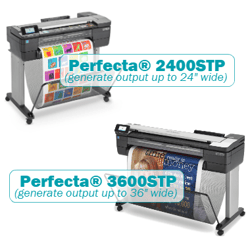
Poster design systems
The Perfecta® Poster Design System prints classroom posters, anchor charts, and banners in-house, so teachers can create large-format visuals for the lessons they're teaching right now.
Perfect for: Title I, Parts A & D
Concept Alignment: Differentiated Instruction, Setting Objectives, Reinforced and Explicit Instruction, Cooperative Learning: Peer Editing, Flexible Groups and Scaffold Reading, Comprehension of Similarities and Differences
Why it's a great fit:
- Post reading and math standards in every classroom
- Display rubrics and grading expectations
- Communicate lessons, directions and activities in English and Spanish
- Incorporate instructional strategies that encourage student engagement
- Construct learning activities that meet the diverse needs of the 21st century student populations
- Foster collaborative group work opportunities that allow for the development of both social skills and content mastery
- Advance critical thinking skills using graphic organizers
- Reinforce key learning concepts with poster-size learning strategies and reminders
- Create a print-rich learning environment
- Enlarge writing prompts and post in the classroom
- Model how-to-read charts and diagrams with posters
- Create anchor charts for students to reference when working independently
- Use posters on walls and floors, and in small groups
- Create K-W-L charts to activate prior knowledge to improve comprehension and develop subject-related foundations for learning
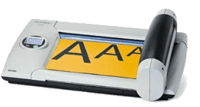 Digital die-cut machines
The Cutout Maker 2800 Digital Die-Cut Machine cuts letters, numbers, shapes, and manipulatives, giving students hands-on materials for literacy and math practice.
Perfect for: Title I, Parts A, C, D, & F
Concept Alignment: Individualized Instruction for ELL and Special Education Students, Classifying and Organizing Key Concepts, Number Concepts, Tracking Student Progress, Letter and Word Recognition, Provide Study Tools to Reinforce Key Concepts
Why it's a great fit:
- Create interactive word walls
- Make cutouts of 100 most frequently used words
- Create phonics activities using word parts
- Present content in a manner less dependent on language
- Create reusable manipulatives for discussion webs, math, reading keys, mind mapping and structured note-taking
- Support concrete learning of English through the use of alphabet cutouts
- Create student name cutouts to promote letter recognition and sight word mastery
- Use cutouts to create matching activities that review numbers and their values
- Use counting manipulatives to help students with one-to-one correspondence, addition, subtraction, multiplication and division
- Create displays with cutouts to track student progress
- Provide kits with manipulatives to reinforce key concepts at home
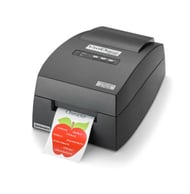 Specialty printers for student recognition
The Motiva® 400 Specialty Printer creates full-color award plaques, flashcards, study aids, and recognition stickers that reinforce effort and progress.
Perfect for: Title I, Parts A & F
Concept Alignment: Reinforce Effort and Continuous Progress, Provide Recognition, Provide Study Tools to Reinforce Key Concepts
Why it's a great fit:
- Recognize individual progress with customized awards
- Provide immediate positive feedback with on-the-spot recognition
- Recognize parents with customized awards to increase parental involvement
- Create progress-tracking awards
- Create educational flashcards for core subjects
- Provide kits with flashcards and study aids to reinforce key concepts at home
How to justify a purchase with your Title I grant
A strong request shows exactly how a purchase helps the students your Title I program serves. Use these steps to build one:
- Identify the documented student need. Start with the data in your school's needs assessment, such as reading or math results for the students you serve.
- Connect the tool to your school's plan. Show where the purchase fits in your schoolwide or targeted assistance plan and which goal it supports.
- Show how it supplements core instruction. Explain what students will get that they wouldn't otherwise receive, such as extra practice materials or visual supports for English learners.
- Get approval from your Title I coordinator. Share your justification early so your coordinator can confirm the purchase is allowable and fits the budget. Equipment and supplies can be bundled into the same purchase or funding request.
VariQuest's team helps schools with cost justifications and funding applications. Visit our Title I funding resources to see the programs we align with and get hands-on support.
Need a one-sheeter for when you're working on your proposal? Download and print that here.
Using Title I funds with VariQuest
The VariQuest Learning Suite pairs poster printers, die-cut machines, specialty printers, and cold laminators with Engage Every Learner® Content, a library of education-specific templates, graphics, and cutouts. The suite holds the Digital Promise Research-Based Design: ESSA Tier 4 Product Certification (December 2025), and our education consultants can help you align a purchase with your Title I plan.
Schools serving high-need communities already use these tools. At Spring Park Elementary in Jacksonville, Florida, the school purchased its Perfecta® Poster Design System and Cutout Maker with Title I funding.
Ready to learn more about these products, or see a live demonstration of how they work? Request a no-obligation meeting with one of our expert education consultants today!

Frequently asked questions about Title I funding
Do private school students receive Title I services?
Yes. Eligible children who attend private schools receive equitable Title I services, which the public school district provides after timely and meaningful consultation with private school officials. The public agency keeps control of the funds and ownership of any materials it purchases.
Who decides how Title I funds are spent at a school?
Districts develop their Title I plans in consultation with teachers, principals, and other school leaders, and schools running schoolwide programs build their plans with parents and community members. Purchases typically go through the district's Title I coordinator, and VariQuest's consultants can help you prepare the cost justification your coordinator reviews.
Does Title I require spending on family engagement?
Yes. A district with a Title I allocation over $500,000 must reserve at least 1 percent of it for parent and family engagement, and at least 90 percent of that reserve goes to schools. Parents and family members of participating children must be involved in deciding how the money is spent.
How long do schools have to spend Title I funds?
Federal funds that aren't obligated in the year they're awarded can generally carry over into the next fiscal year. Title I adds a limit: a district with an allocation of $50,000 or more can't carry over more than 15 percent of its funds, though the state can waive that limit once every three years. Check your state's deadlines, and request a VariQuest quote early so purchases are in place before your funds expire.